Practical Driveway Cleaning Tips for Stained Stone Pavers
Natural stone pavers bring an unmistakable sense of elegance, architectural permanence, and value to residential properties. Throughout the Melbourne Bayside suburbs—from the classic estates of Brighton and Hampton down to the coastal properties of Sandringham, Black Rock, and Beaumaris—stone paving materials such as Victorian bluestone, sandstone, travertine, and granite are premier choices for driveway construction. However, maintaining these surfaces requires specific care. The coastal environment presents unique challenges, including salt-laden sea air, persistent maritime humidity, and falling debris from native coastal vegetation like tea trees and eucalypts. When motor oil, tyre marks, moss, and mineral deposits mark the stone, routine hose rinsing is no longer sufficient. Restoring these surfaces requires targeted, practical techniques that protect the stone's structural integrity while lifting deeply set stains.
Understanding Your Stone Pavers and Coastal Environmental Challenges
Natural stone is inherently porous. Unlike poured concrete or dense clay bricks, stone features an intricate network of microscopic capillaries that absorb moisture, organic liquids, and petrochemicals. In Melbourne Bayside, the prevailing coastal weather intensifies these issues. High relative humidity and onshore sea breezes deposit fine marine salts deep into paver surfaces. When this ambient moisture mixes with motor fluids, airborne pollutants, or organic tannins from fallen tree leaves, stains quickly bind chemically with the stone substrate.
Different types of stone respond differently to contaminants and cleaning solutions. Victorian bluestone (basalt), celebrated for its deep charcoal hue and occasional secondary mineral veining, can develop dark shadows when saturated with vehicle fluids. Porous sandstones and light-toned travertines are especially susceptible to tannin bleed, rust, and oil absorption. Using generic household degreasers or aggressive acidic cleaners can etch calcium-based or soft stone varieties, causing irreversible pitting and surface loss. Effective driveway cleaning begins with accurately identifying both the stone variety and the specific chemical nature of the stain before picking up any equipment.
Identifying and Treating Common Driveway Paver Stains
Every stain requires a targeted chemical approach. Using the wrong product can drive the offending substance deeper into the stone matrix or permanently discolour the surface. The most common driveway stains across coastal Melbourne require distinct remedial treatments:
1. Motor Oil and Automotive Fluid Stains
Petrochemicals are hydrophobic and quickly soak into dry stone. If a fresh spill occurs, avoid washing it immediately with a hose, as water causes the oil to spread across a wider surface area. First, cover fresh spills with an absorbent material such as clay-based kitty litter, diatomaceous earth, or cornflour to pull standing oil out of the pores. For dried, stubborn oil spots, apply a specialised poultice. A poultice consists of an absorbent powder mixed with a stone-safe solvent or concentrated degreaser to create a thick paste with the consistency of peanut butter. Smear the paste over the stain at a thickness of roughly five millimetres, cover it with plastic wrap perforated with small pinholes, and leave it to dry over twenty-four hours. As the solvent breaks down the oil, the capillary action draws the dissolved petroleum up into the powder, which can then be swept away safely.
2. Organic Stains: Moss, Algae, Lichen, and Leaf Tannins
Bayside's coastal microclimate produces persistent organic growth, particularly during cooler, wetter months or beneath dense tree canopies. Lichen, moss, and green or black algae thrive on damp paver surfaces, creating slippery hazard zones and dark surface discolouration. Fallen organic matter, such as eucalyptus leaves and coastal banksia cones, breaks down to deposit concentrated tannins, leaving stubborn brown silhouettes on light stone. To clear organic staining without degrading the stone, use an oxygenated bleach solution or a specialised biodegradable outdoor biocide rather than harsh household chlorine bleach. Oxygen bleach lifts biological matter and dissolves tannin bonds without leaving toxic, salt-forming residues that damage stone matrices.
3. Efflorescence and Mineral Leaching
Efflorescence presents as a powdery white crystalline residue across stone surfaces. It occurs when soluble mineral salts within the paver bedding sand, concrete slab, or stone itself migrate upward with evaporating groundwater. When the water evaporates in the Bayside sun, the salts remain behind on the surface. Fresh efflorescence can frequently be scrubbed off using a stiff, dry natural bristle brush. For persistent mineral encrustations, avoid muriatic or raw hydrochloric acid, which severely attacks stone. Instead, choose a buffered, pH-neutral or mild sulfamic acid cleaner designed specifically for https://pressurecleaningbayside.com.au natural architectural pavers, ensuring the driveway is thoroughly saturated with clean water both before and after application.
4. Rust Stains
Driveways often pick up rust stains from garden gates, vehicle undercarriages, metal outdoor furniture, or mineral-rich bore water irrigation. Rust (iron oxide) cannot be removed with standard soap or pressure washing alone. Traditional hydrochloric acid cleaners will strip rust, but they can oxidise certain iron-bearing stones like granite and sandstone, creating even more severe discolouration. Instead, use an oxalic-acid-based stone rust remover, which chelates the iron particles and renders them water-soluble without etching the stone face.
Step-by-Step Restoration Procedure for Stone Driveways
Executing a successful cleaning routine requires methodical preparation to avoid damaging the stone face, surrounding landscaping, or delicate joint materials.

- Clear and Dry-Sweep the Driveway: Move vehicles, garden planters, and obstacles off the driveway. Sweep away all loose sand, grit, leaves, and debris using a wide, stiff-bristled broom to prevent loose grit from scratching the stone underfoot or during washing.
- Pre-Wet Surrounding Garden Beds: Soak bordering turf, coastal grasses, and garden plantings with clean water. Pre-hydrating plant foliage and soil stops them from absorbing stray detergent runoff during the cleaning process.
- Apply Target-Specific Spot Treatments: Address individual oil spots, rust marks, or biological growth patches using the specific poultices, biocides, or rust converters detailed above. Allow adequate dwell time according to the manufacturer's technical specifications.
- Apply a Balanced Cleaning Solution: Coat the entire driveway using a low-pressure pump sprayer loaded with a specialised, eco-friendly stone cleaning detergent. Agitate the surface evenly using a medium-stiff polypropylene broom to lift surface road grime and atmospheric dirt from the textured stone grain.
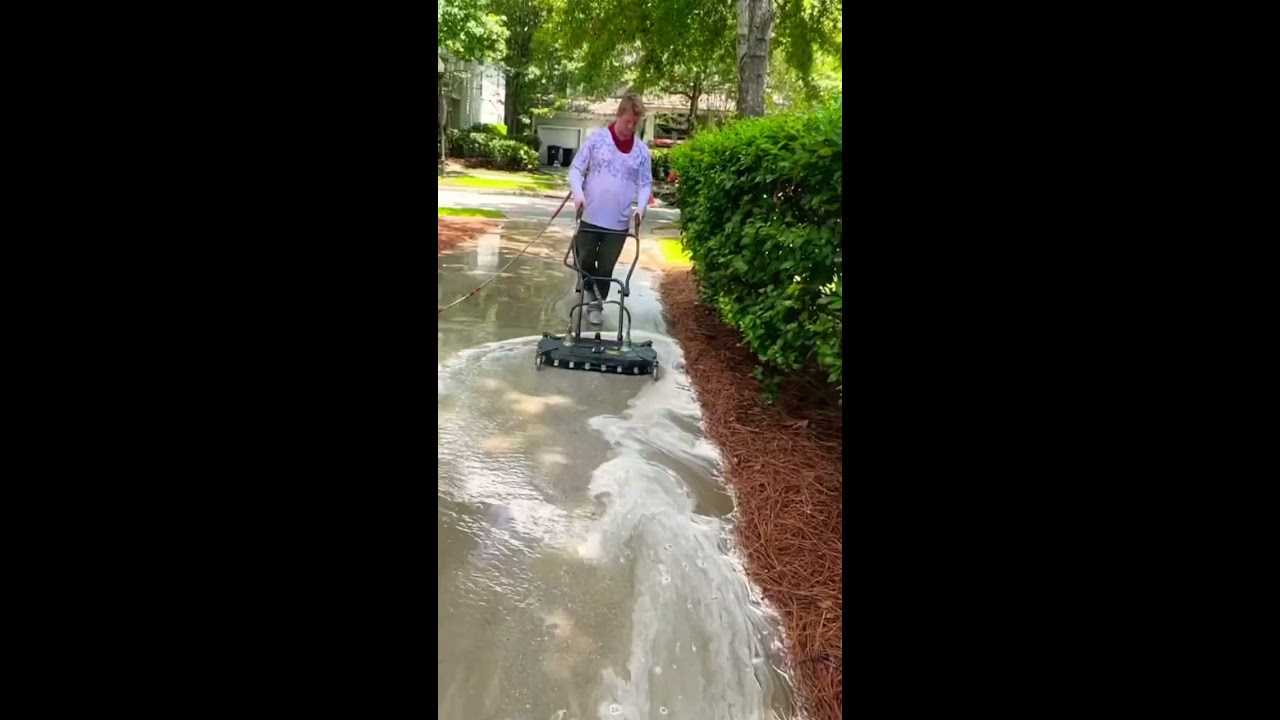
- Controlled Mechanical Rinsing: Rinse the driveway thoroughly using an even water flow or dedicated rotary surface cleaner, working sequentially from the highest elevation of the driveway down toward proper drainage points.
- Inspect and Refill Paver Joints: Once the stone dries, inspect the sand joints. High-pressure rinsing can displace jointing sand. Re-sweep dry, polymeric or kiln-dried jointing sand into the gaps to preserve interlocking structural stability and deter future weed germination.
Pressure Cleaning vs. Power Washing: What Stone Pavers Need
Property owners often treat the terms pressure cleaning and power washing as interchangeable, but they represent two different approaches with practical implications for natural stone. Standard pressure cleaning uses unheated cold water driven through calibrated nozzles at variable pressures. In contrast, power washing uses a heating element to deliver hot water under pressure, making it exceptionally effective at melting heavy grease, engine lubricants, and chewing gum.
When working with natural stone pavers, excessive cold pressure alone can do more harm than good. Directing a thin, high-pressure wand tip (such as a zero-degree pencil jet) at natural stone can cause irreversible gouging, shatter protective paver edges, blast out bedding materials, and strip away the natural patina. Travertine, limestone, and weathered sandstone are particularly prone to rapid surface spalling under unchecked pressure.
For safe and effective results, professional contractors rely on commercial-grade rotary surface cleaners combined with temperature-controlled pressure washing equipment. A rotary surface cleaner houses twin spinning nozzles inside a protective circular housing. This design maintains an exact, consistent spray distance and angle across the entire paver, completely preventing lines, striping, or deep surface gouges. Using moderate pressure (typically between 1,500 and 2,000 PSI) balanced with regulated water volume and mild heat breaks the bond between the oil and the stone safely, avoiding the surface damage caused by high-pressure cold blasts.
Coordinating exterior maintenance ensures your driveway cleaning delivers lasting results. Incorporating professional house washing and regular roof cleaning into your exterior maintenance schedule stops moss, lichen, and black algae spores from migrating down off gutters, weatherboards, and roofs onto newly cleaned stone driveways. Approaching your Bayside home with a holistic exterior cleaning strategy keeps the entire exterior envelope clean and substantially slows organic recontamination across ground-level paved areas.
Preventing Future Stains and Long-Term Maintenance
Once your stone driveway is thoroughly cleaned, taking deliberate preventative steps will protect your investment and preserve the stone's appearance against coastal weather extremes.
Applying a high-performance, penetrating (impregnating) stone sealer is the most effective preventative measure available. Unlike cheap topical film-forming coatings that sit on the surface, peel under tyre friction, or trap moisture beneath the slab, modern penetrating sealers sink deep into the stone pores. These formulas line the microscopic capillaries with sub-surface fluoropolymers, repelling water, automotive fluids, and organic tannins while allowing trapped sub-base moisture to evaporate freely. In high-exposure coastal environments like Melbourne Bayside, a premium penetrating sealer should typically be reapplied every three to five years.
- Blot Spills Immediately: Keep a bag of dry absorbent material in your garage. If a vehicle leaks fluid, blot the fluid immediately rather than allowing it to soak deep into the paver's capillary structure.
- Maintain Clean Joint Lines: Regularly pull rogue weeds and re-top paver joints with polymeric sand. Well-maintained joints keep dirty water from settling beneath the pavers, where it can cause efflorescence and paver subsidence.
- Rinse Away Coastal Salt Film: Periodically give your stone driveway a quick rinse using a garden hose after severe coastal storms to wash away airborne salt crusts before they settle into the stone.
- Avoid Metal Scrapers and Wire Brushes: Never tackle stubborn spots with wire brushes or steel scrapers, which leave tiny metallic particles behind that oxidise into dark rust spots across the stone.
Professional Exterior Cleaning Standards in Melbourne Bayside
While routine sweeping and prompt spill management are manageable DIY tasks, extensive restoration of stained stone pavers often calls for specialised commercial equipment and commercial-grade cleaning chemistry. Professional exterior cleaners operating in the Melbourne Bayside region understand the local drainage considerations, council stormwater regulations, and sensitive coastal landscape requirements. Under Victorian EPA environmental guidelines, contaminated wash water containing automotive oil and heavy chemical residues must be managed responsibly, rather than allowed to flow untreated into council stormwater drains and Port Phillip Bay.
Professional contractors deploy industrial recovery systems that wash surfaces, extract water, and capture wastewater on site. When coordinated with annual house washing and seasonal roof cleaning programs, professional driveway cleaning lifts set-in stains, protects your structural stonework, and maintains your property's street appeal throughout 2026 and well into 2027.

Bayside Pressure Cleaning Pros
Unit 3/3-5 Arnold St, Cheltenham VIC 3192
ph. (03) 4517 6380